The Big Brake Trap: Why Larger Calipers Can Increase Your Stopping Distances
The Visual Seduction of Oversized Calipers
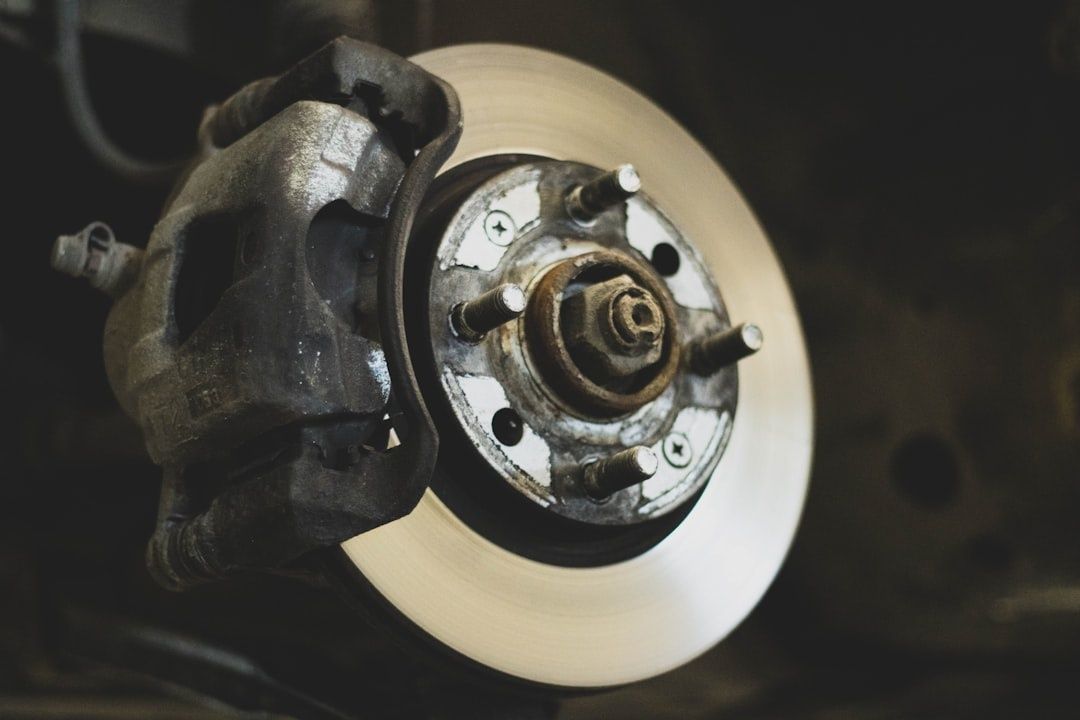
Few modifications look more purposeful than a set of large, brightly finished multi-piston brake callipers filling the space behind a lightweight wheel. The visual message is immediate: more pistons, a larger disc and a more serious-looking brake system must mean shorter stopping distances. That assumption is understandable, but it confuses thermal capacity and visual presence with the factors that determine a single emergency stop.
In reality, braking performance is a system problem. Tyre adhesion, weight transfer, pad friction, disc radius, hydraulic leverage, brake bias and ABS calibration must work together. A larger calliper can improve heat management during repeated track stops, but an unplanned conversion can also alter pedal travel, torque progression and front-to-rear balance. If the hydraulic ratios are wrong, the result may be a softer pedal, earlier front lock-up and a longer real-world 100-0 km/h stop, despite the hardware appearing considerably more capable.
Hydraulic Leverage and Total Piston Surface Area Explained
Pascal”s law is the starting point. Pressure applied to the master-cylinder fluid is transmitted through the brake system, so caliper clamp force is broadly determined by hydraulic pressure multiplied by the total effective piston area. The master-cylinder bore controls how much fluid is displaced for a given pedal movement, while the pedal ratio and driver input determine the force used to create that pressure.
This creates an important trade-off. Increasing total caliper piston area raises clamp force for a given line pressure, but it also demands more fluid displacement. If the original master cylinder remains in place, the pedal may travel farther before the pads develop the desired contact force. Conversely, fitting a larger-bore master cylinder can reduce pedal travel while requiring greater pedal effort. Neither change is automatically better. The target is a controlled pedal with suitable force, travel and modulation for the complete vehicle.
Piston count alone is a poor measure of performance. A four-piston calliper with small pistons may have less total effective area than a two-piston calliper with larger pistons. The useful calculation is the combined area of all pistons acting on one pad, multiplied by the pressure in the circuit. The following simplified relationships help expose the common mistake:
| Component | Relevant relationship | Practical consequence |
|---|---|---|
| Master cylinder | Area determines fluid displacement and pressure response | A larger bore generally reduces travel but increases pedal effort |
| Caliper | Total piston area determines clamp force at a given pressure | More area can increase torque but requires more fluid volume |
| Disc | Effective radius converts clamp force into brake torque | A larger disc increases leverage and thermal capacity |
| Pad | Friction coefficient converts clamp force into tangential force | Compound choice affects bite, temperature range and consistency |
A badly matched system can feel spongy even when it has been bled correctly. Excessive fluid volume demand produces additional pedal travel, while flex in hoses, calliper bodies, pad knock-back or bearing movement can compound the sensation. A firm pedal is not proof of shorter stopping distance, but an excessively long or inconsistent pedal makes it harder to apply and hold the pressure needed for threshold braking. On a fast road or circuit, that loss of confidence is a genuine performance disadvantage.
The Realities of Dynamic Brake Bias and Weight Transfer
During hard deceleration, the vehicle”s centre of mass creates a pitching moment. Normal load transfers from the rear axle to the front axle, increasing the front tyres” vertical load while reducing the rear tyres” available load. The exact distribution depends on mass, centre-of-gravity height, wheelbase and deceleration, but the principle is consistent: the front axle can accept more braking force than the rear, although not an unlimited amount.
Brake torque must therefore follow the changing tyre loads. If an oversized front calliper conversion produces a disproportionate increase in front braking torque, the front tyres can reach their friction limit before the rear axle has contributed its full share. Once the front tyres approach lock-up, ABS reduces pressure to prevent a skid. The rear brakes remain below their available capacity, so the vehicle is not using the total tyre-road friction available across all four contact patches.
This is why clamp force is not the same as stopping force. A useful comparison is a car whose front brake torque is increased substantially while the rear system remains standard. Under maximum effort, the front tyres may trigger ABS early. A balanced system would keep both axles closer to their respective adhesion limits, extracting more total longitudinal force. The fundamentals of this relationship are set out clearly in this brake balance explanation.
- More front torque can produce earlier front ABS intervention.
- Reducing front pressure after lock detection leaves unused rear-axle grip.
- Excessive rear torque can create instability, particularly as rear load falls.
- Optimal bias changes with fuel load, tyre condition, surface grip and deceleration level.
- Pad friction and disc radius must be included alongside piston area when calculating axle torque.
On a competition car, adjustable bias systems and data logging can help tune this relationship. On a road car, the situation is more constrained because the factory system has been validated as a complete package. Changing calliper area, pad coefficient or disc size on one axle without recalculating the other can disrupt the intended balance even when the upgrade feels powerful from the driver”s seat.
How Hydraulic Mismatch Confuses Modern ABS Calibration
Modern ABS is not simply an emergency switch that releases pressure whenever a wheel stops rotating. The control unit interprets wheel-speed changes and commands inlet and outlet valves to build, hold and release pressure rapidly. Its calibration is developed around the expected compliance, fluid displacement, pressure rise rate and pressure release behaviour of the production hydraulic system.
A larger multi-piston calliper may require considerably more fluid movement to produce the same pad displacement. That can change pedal travel and the relationship between driver input and line pressure. Depending on the conversion, the altered volume and compliance can affect how quickly pressure rises, how effectively the system damps pulsations and how often the ABS valves need to cycle. The result is not necessarily a catastrophic fault, but it can reduce the precision with which the system manages a marginal tyre near the adhesion limit.
Regulatory testing illustrates why this detail matters. Production vehicles must comply with stringent passenger-car stopping benchmarks defined by federal braking standards, including requirements concerned with controlled stopping performance and anti-lock operation. Those tests are conducted with a known hydraulic layout, specified tyres and validated control strategies. An aftermarket system may be mechanically stronger yet less predictable if its hydraulic response falls outside the assumptions built into the original calibration.
- Measure the original master-cylinder bore and calculate its effective area.
- Calculate the total piston area of the proposed callipers, not merely the piston count.
- Compare front and rear brake torque using pad coefficient and effective disc radius.
- Check pedal travel, required effort and fluid displacement before fitting the parts.
- Validate ABS behaviour with controlled testing on the intended tyres and surface.
Track-focused vehicles sometimes justify bespoke calibration, different master cylinders or motorsport ABS systems. A lightly modified road car usually does not have that freedom. Preserving predictable modulation and electronic compatibility is often more valuable than maximising the apparent size of the calliper.
Tire Grip as the Absolute Ceiling of Braking Force
The road surface and tyre establish the fundamental ceiling. In simplified form, maximum braking force is governed by the normal load on the tyre multiplied by the available friction coefficient, commonly represented by the Greek letter mu. Once the tyre has reached that limit, increasing hydraulic pressure or fitting a larger calliper cannot create additional longitudinal force. It can only cause earlier lock-up or prompt ABS intervention.
This distinction is central to choosing an upgrade. A larger disc and calliper can provide greater heat capacity, improved pad support and better resistance to fade during repeated high-speed stops. They may also offer a wider range of competition pad compounds. Those are valuable track-day benefits, but they do not automatically shorten the first stop from a given speed. For a single emergency stop, a well-matched standard system on excellent tyres may outperform a poorly balanced big-brake conversion.
- Use a suitable tyre before chasing additional calliper size.
- Choose a pad compound for the actual temperature range, not just its cold bite.
- Account for disc mass and calliper weight, which increase unsprung mass.
- Check that added mass does not reduce suspension compliance over bumps.
- Separate fade resistance from absolute single-stop braking distance.
Heavy cast callipers and oversized discs can also affect wheel control. Additional unsprung mass makes it harder for the damper and spring to keep the tyre pressed against an imperfect circuit surface. On a smooth test surface this may be difficult to notice, but on a kerbed or bumpy track it can reduce compliance and compromise grip. The fastest hardware is therefore not always the hardware with the largest dimensions.
Engineer Your Braking Upgrades Around Complete System Synergy
Before purchasing a big-brake kit, treat the conversion as an engineering calculation rather than a wheel-filling exercise. Establish the original and proposed piston areas, master-cylinder bore, pedal ratio, disc effective radius, pad friction coefficient and front-to-rear torque split. Then assess the likely change in fluid displacement and pedal travel. A reputable kit supplier should be able to provide these figures rather than relying on piston count or external appearance.
Prioritise the parts that address the actual limitation. If the car suffers from repeated-stop fade, improved cooling, a suitable high-temperature pad, fresh fluid and a correctly sized disc may deliver more useful performance than a dramatically larger calliper. If pedal feel is inconsistent, inspect hoses, pad movement, wheel bearings, calliper seals and bleeding procedure before assuming that more pistons will solve the problem.
- Fit tyres with predictable grip and confirm correct pressures and alignment.
- Select a pad compound matched to road temperatures or track temperatures.
- Flush the system with fresh, appropriate brake fluid and maintain it regularly.
- Match master-cylinder sizing to total calliper piston area and desired pedal effort.
- Verify front-to-rear balance and ABS behaviour after any hydraulic change.
- Choose lighter hardware where possible to protect suspension compliance.
The best braking upgrade is the one that allows all four tyres to work close to their available limits, repeatedly and predictably. Large callipers have a legitimate place in performance tuning, particularly where heat capacity and pad choice are the limiting factors. Their value comes from correct integration, not from piston count or visual drama. Balanced hydraulics, suitable tyres, stable ABS operation and disciplined maintenance will deliver more stopping confidence than hardware selected solely to fill the wheel.